How to grow tomorrows
What if schools were not just sites for delivering education, but societies in miniature? Thousands of chances to cultivate a better future

Teaching has always been a tough job, but it only seems to have gotten harder. I saw this growing up as the child of teachers, and now surrounded by teachers among my sisters and their partners. Over two decades, the job seemed to go from being difficult — long days, rowdy classes, endless marking — to overwhelming. First there was a decade of deepening poverty and then the dumpster fire of social media, harming children’s mental health and fracturing the communities schools are based in. Now there is an existential question: what should education look like in a world of Artificial Intelligence?
If you track debates about education through modern history, you will see broadly two responses to the overwhelming responsibility of teaching. The first is to cope by focusing. Be single-minded and narrow your goal — help kids to do well academically, via exam results — and be tough on enablers, like good behaviour. The second instinct is the opposite, responding to overwhelm and uncertainty by going broad, aiming for a holistic and enriching education. The argument is that, yes, we should prepare children for exams, but also for whatever else life throws at them: new types of work, new technologies, tricky relationships, and a full life as active citizens.
In education today, momentum is tipping towards the latter, more holistic approach, and for good reasons. In this post I’ll touch briefly on these reasons. But mainly I want to describe what the holistic approach looks like in practice; I hope this will show why it’s so urgently needed.
To keep this grounded, I’ll centre on a case study of the Old Kent Road Family Zone (OKRFZ), facilitated by Big Education at Surrey Square Primary School in southeast London. I’ll describe the OKRFZ, and I’ll then turn to the question now facing advocates of these approaches to education: how do we scale the work?
The point I want to convey is that OKRFZ is not just an example of the frontier of education reform. This work — and that of other pioneers of holistic education, like the Reach Foundation — embodies something bigger. I think of it as a new logic of public action.
Across frontline public services — in education, but also in sectors like social work, healthcare, and probation — a different model for public services is emerging. This shifts services away from a logic of production to one of cultivation. The approach is mature, well-evidenced, and can be deployed via clear principles, methods, and disciplines. It is designed to work in the complex terrain of the 21st century, much as bureaucratic methods were designed for the early 20th century. The next step is for big institutions in these sectors to come in behind the model and spread it.
This article is part of a series from Kinship Works in which we help to codify human alternatives to the bureaucratic methods that have come to dominate government. Earlier posts described a more human way to support people with complex mental health conditions, and a way to activate citizens. Reach out if you’d like to partner on a future entry in the series.
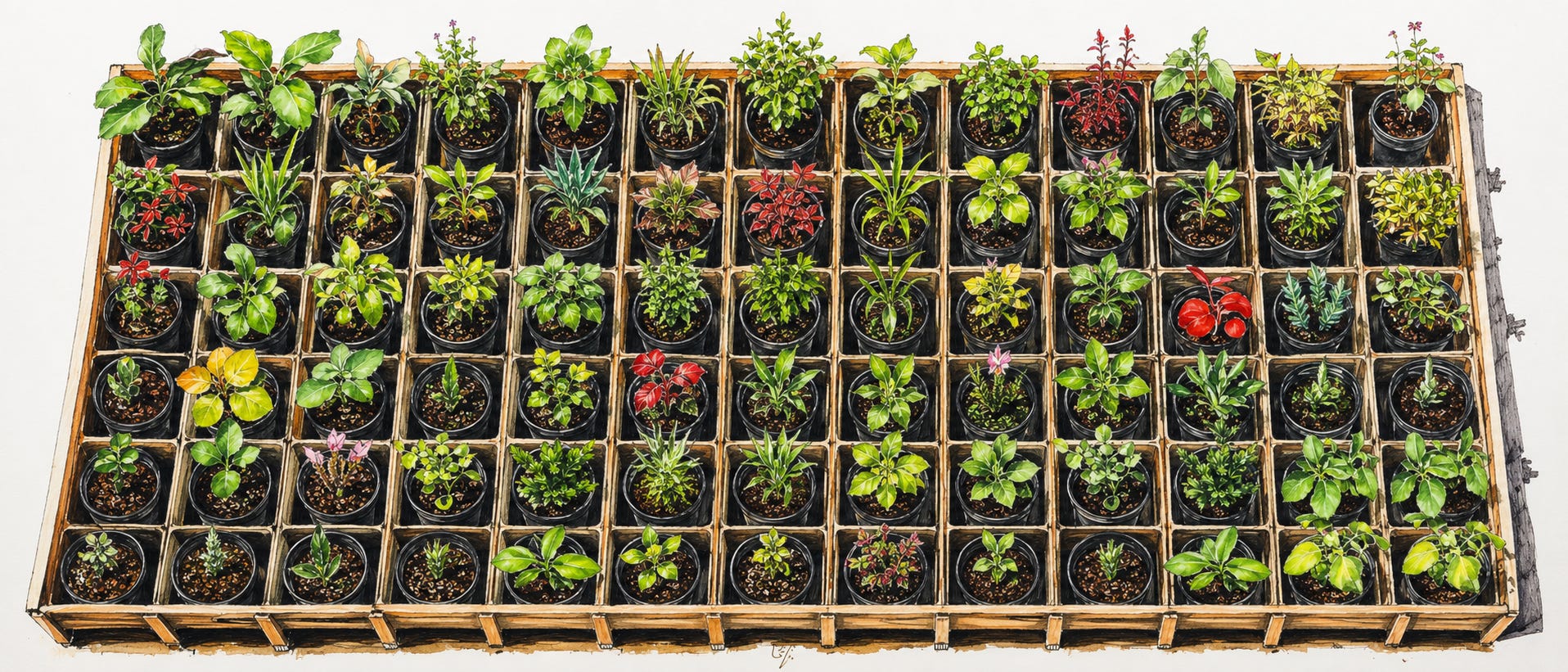
1. Time to go broad
As long as we have had an education system, two traditions — one narrow, one broad — have been in tension, and over the last three decades the balance has shifted between them.
In the late 1990s and 2000s, the education system in England leaned into the narrower tradition. Schools had fallen into such disrepair under the previous Conservative government — crumbling buildings, ballooning class sizes, raucous corridors — that the priority was to get a grip on standards. There was a focus on attainment and behaviour. Increased autonomy, via academies and multi-academy trusts, made the system more dynamic, but was paired with sharp accountability. There was major investment in school buildings, teaching, and leadership.
Crucially, this narrow approach sat within a policy framework that took a rounded approach to childhood. This included a drive to reduce child poverty; an outcomes and collaboration framework, Every Child Matters; the integrated offer of Sure Start; and work on issues like teenage pregnancy led by the Social Exclusion Unit. This combination of focus and breadth led to big improvements in outcomes.
In the 2010s, the education system narrowed from this starting point. Education policy at times tipped into a reductio ad absurdum of the narrow tradition, with Ministers instructing schools in the minutiae of the curriculum. There was a narrower focus on exam results and on particular subjects, with priority given to STEM and cuts to arts subjects. More consequentially, the wider surrounds were dismantled. Every Child Matters was scrapped, Sure Start was cut (and was later shown to have been highly effective), and the successor to the SEU was abolished.
As education policy narrowed, the world changed in ways that demanded the opposite. Poverty deepened, partly thanks to welfare cuts, making a focus on classroom instruction less adequate. The mental environment for young people worsened with the rise of social media. A soaring number of children were assessed as having special educational needs, alongside rising non-attendance and an uptick in teenage pregnancy and substance abuse. Then came Artificial Intelligence, which in some sense rewards STEM subjects but in a deeper sense makes it more important to invest in our unique capabilities as humans, from artistic sensibilities to relationship-building.
From the early 2010s, as the first of these trends became apparent, pioneers began doubling down on experiments in holistic education. The leaders in this cohort are now a decade and more into innovating at the broad end of the spectrum. Their work starts with providing an enriching education and the skills, dispositions, and adaptability children need to flourish. But the best are now going beyond this, recognising the school not just as a service provider but as an anchor institution in a community.
Let’s see if we can bring this model to life.
2. The story of a Family Zone
It was perhaps natural for Surrey Square to become a pioneer of working beyond the school gates. The primary school sits near the Old Kent Road, an area so associated with poverty it was chosen in 1935 as the cheapest spot on the Monopoly board. It borders on the Aylesbury, one of the largest estates in Europe, and serves a community in which 56% of families are eligible for free school meals, 20% live in temporary accommodation, and 10% have no recourse to public funds due to their immigration status.
Surrey Square has been going the extra mile for over two decades, not just teaching kids but helping parents with everything from housing to relationships. A 2017 article asked, “is this the most inspiring school in the country?”
Still, when Covid hit, the challenges reached a new level. A community weakened by austerity and a hostile immigration environment was plunged into often desperate insecurity. The school responded not by narrowing but by broadening its work in the community, starting in 2020 in the spirit that marks their approach: by listening to parents. They ran active listening sessions, and when a mum at the school was looking for work, they hired her to build deeper community relationships.
Surrey Square saw the insights of parents as a reservoir of intelligence. They tapped into this by forming the Old Kent Road Family Zone, led by a Community Board; a group of parents and community leaders who meet regularly to listen to local people, decide on priorities, and co-create projects. Early discussions soon yielded insights. One mum shared how hard it was to work all week and then juggle the kids in her small flat at the weekend. She asked: why can’t the school be open on Saturday? It would give her some respite — a place to sit with other parents, knowing the kids were safe. Rather than getting stuck on reasons weekend opening would be difficult — ‘Computer says no’ — the answer came back: why not? The Headteacher worked with colleagues to open the school for a monthly Saturday marketplace. With parents struggling with the cost of living, they negotiated free items from local businesses, in boxes for people to collect. Later, they learned that families felt stigma for taking handouts. A group of parents re-arranged the clothes onto rails, and sorted them into departments; they renamed the area ‘the boutique’.
As the marketplace gave the school more contact with parents, they accumulated more intelligence. Teachers saw how some parents had lost confidence, having fallen out of work. One mum was coaxed into helping with the cooking, later becoming Head Chef; others stepped up to run the boutique and market. The cooking soon grew into full-scale catering. Another parent launched a meetup based on the TV show Come Dine With Me.
The school invests heavily in its civics curriculum; children learn by running real-life campaigns to improve their living conditions. In one case, children wrote to the council about the dire state of local social housing, securing an improved service agreement. There is advocacy for parents, too, from a school well-being officer, raising their confidence to take agency over unsatisfactory housing, or abusive relationships. The Family Zone is now led by a mum with children at the school who works 3 days a week to facilitate the community board and bring projects to life.
I visited Surrey Square on an unseasonably warm Saturday in May. Coming off the overground at Elephant and Castle, I walked towards the school, passing the Walworth Living Room — a free civic space, run by Pembroke House, one of several in the area linked to the Zone, noisy with exercise classes and workshops. Continuing on, I heard the playground before I saw it, and turned the corner to a joyful chaos: a sandpit, a bike repair shop, a quiet drawing zone, parents chatting, children queuing for candyfloss. This weekend was Eid, so there was an added bouncy castle. It had the vibe of a campsite — parents relaxing, kids playing — with all the wonderful diversity of the Old Kent Road.
For all the delight in these details, the power of the OKRFZ lies less in the specifics and more in the method that grew them. Since 2024, Surrey Square has been codifying and spreading this method, working with London Violence Reduction Unit and Impact on Urban Health to help other schools learn from their work and adapt it to their contexts. So what is that method, and why is it valuable?
3. The Family Zone method
Everything at Big Education, the multiacademy trust Surrey Square is part of, starts with giving kids an education that is, in the words of Liz Robinson, the CEO, ‘big, fat, and juicy’. It might sound flippant, but the idea is rooted in a deep pedagogy. Leaders at the school quote Johann Heinrich Pestalozzi, the Swiss reformer who argued that education must balance ‘head, heart and hands’ — combining book-learning with values and character, and practical know-how. They also channel the spirit of Pestalozzi’s student, Friedrich Froebel, who coined the term kindergarten, meaning “children’s garden”, reflecting the idea of education as cultivation. They embody the ideas of Mary Parker Follett, who argued that the best public institutions build “power-with” people, not “power-over” people. But perhaps the thinker OKRFZ most brings to mind is John Dewey, who wrote that schools should feel as real and vital to the child as their home or neighbourhood. A school, he wrote, is a miniature society, an “embryonic community life”.
OKRFZ has turned these ideas into a reliable model and practice, with key elements including:
Leadership — a distinctly enabling style of civic leadership, which focuses on trust, relationships, active listening and capacity-building as the currency of change
Methods of stewarding the community space; smoothing over small conflicts and turning them into learning experiences, and spotting every opportunity for a member of the community to take agency
Processes for community voice and ownership, beyond consultation; creating spaces for the community to develop its own ideas, and to use the school as a vehicle to realise them by acting together
Only when you see these elements working together do you appreciate their power. The school goes from being a site for the delivery of education to something more like a space, or a growing medium, for an agentic community. At its best, the very presence of such a joyful space leaves local people feeling that little bit less lonely and overwhelmed, and more hopeful.
If this way of working is spreading, in education and beyond, it is because it is working. When children start at the local nursery, only 26% are “on track” for the expected performance for their age. This rises to 81% by the end of Year 6. In 2023/24, 68% of Surrey Square pupils reached the expected standard in reading, writing and maths, against 61% nationally. Children and staff score above the national average on wellbeing, despite the challenging economic context, while staff stay at the school for an average of 11.2 years, against a national recruitment and retention crisis. Surrey Square is woven into its local area, with eight local residents now in paid roles, and many more volunteering. There are partnerships with more than 20 local businesses. Qualitative research finds that residents feel more valued and less judged, feeling the Zone is “changing the narrative” of the area. In the words of one parent, it “doesn’t feel like charity… it just provided a sense of family.”
More impressive still are the signs of deeper shifts, often considered beyond the reach of public services and so relevant in a time of democratic crisis. In 2024, the Children’s Commissioner surveyed children, asking whether they agreed with the statement: ‘I feel empowered to change issues I care about.’ Across England, 66% of 10 and 11 year olds said yes. At Surrey Square, the figure was 90%. Little wonder that in 2024, Surrey Square was named Primary School of the Year at the National Teaching Awards.
None of this is an accident. But nor is it a hero story. Although the work requires a certain disposition, and has no doubt benefited from skilled and committed people, the results have been achieved by applying the same ‘do with’ principles over a sustained period. At root, the philosophy is simple: a deep-felt faith, shared by everyone I’ve spoken to, in the fundamental decency and intelligence of people. That faith is why the Surrey Square instinct, in every moment, is to think the best of people and create the space in which they can be the best version of themselves.
4. But how do you scale it?
I’ll finish with a few words on the next big challenge: scaling. The difficulty is that our mechanisms for scaling in the public sector all run to a logic of production, or delivery, not cultivation. You cannot deliver a community, and you cannot deliver agency. To scale work like the OKRFZ, we need to learn to cultivate at scale.
For several years now, this is what Big Education, and allies like the Reach Foundation, have been doing. (See, for example, a new report from Reach and the Confederation of School Trusts, making the case for trusts as civic anchors.) I tend to describe these efforts as spreading, rather than scaling. It is not about replicating or rolling out a model. It is about taking seeds of inspiration, and creating the right soil and growing conditions.
How do we do this? Having studied OKRFZ and similar initiatives, I see a playbook forming that contains three main approaches:
Self-seeding — spreading through inspiration and adaptation. We see this in Big Education’s work with Impact on Urban Health. They are funding Big Education to run a two-year Community Leadership Programme for schools. This spreads the work not by replicating a model but via tacit learning and inspiration: people visit, watch the work, reflect, and take home ideas to adapt to their local context. This has already helped seed two new Family Zones: KOnnect Family Zone in Lambeth and Dock Family Hub in Southwark. The same model is being used by pioneers in community-led renewal, like Hastings Commons and Our Future Grimsby; they host open days and study visits to inspire people, while being clear that there is no single blueprint to copy.
Building institutions — creating organisations with the scale and culture needed to spread impact. Traditionally, a large parent organisation supports scale by standardising; here, however, the role of a multi-academy trust becomes just as much about enabling each school in its network to respond to its local context. Big Education are leaning into this, having recently merged with Oasis, a trust of 56 schools with the motto of putting ‘exceptional education at the heart of community’. This creates new routes to scale, alongside the inevitable challenges of integrating two organisations.
Rewiring the system — making the operating environment less hostile to this work. The big idea here — and the current frontier of public service reform — is to use frontline work like OKRFZ as a discovery mechanism. Small frontline teams work however they need to, in order to get great outcomes, and, when they hit barriers, we use this as a prompt to change the system, removing these barriers for everyone. Big Education was always set up to do this — working ‘on the system’ as well as ‘in the system’. They do this partly via exemplary practice, showing what is possible. But they also shape policy via initiatives like Enrichment for All. Notice how this flips the traditional role of the centre in scaling. Instead of the centre mandating and ‘rolling out’, based on what it thinks is best, the frontline becomes the source of intelligence. The centre’s role is to be attuned to the frontline, and to create the conditions — regulations, processes, platforms, incentives — needed by frontline innovators. This is the kind of architecture the Cabinet Office’s Test, Learn and Grow initiative is building.
The key point is that cultivating at scale is different to producing at scale; it uses different techniques and requires a different culture and operating model in institutions like the DfE. Indeed, it is telling that much of the best innovation now happening in and around the public sector — and certainly work to spread innovation — is being supported by foundations, not by government. This is not because government doesn’t have the money; it’s because government can’t free itself from old-school commissioning, procurement, and project management to work in the organic ways that are needed.
Conclusion
The challenges facing public services can feel demoralising; there is such a mismatch between the complexity of the world and our capacity to collaborate under such conditions. It now seems clear that the problem is not the amount of effort we are applying, but the logic by which it is being applied. We have been confined to a mindset of producing — making policies, passing regulations, delivering services, rolling out interventions. We have not focused enough on cultivating active communities.
As so often happens, innovators at the frontline have been the first to spot this. Leading pioneers have been refining — in education, and in other sectors — a different logic of action; one in which public services don’t just do things to people and for people, but with people, while also raising people’s capacity to do things with each other. In education, what this looks like is a highly enriching and rounded approach to teaching, but also a wider role for the school — and school-leaders — in civic life.
This is why, when I stood in the playground at Surrey Square, I felt hopeful. It wasn’t just the bustling marketplace, or the parents chatting in the lunch queue, or the bouncy castle. It was the question: what if every school was a centre of civic life like this? And what if neighbourhood health centres, Job Centres, and Universities — were run the same way; not just as delivery sites, but as spaces for community? And, more than this, what if the system behind these institutions — policies, regulations, inspectorates, incentives, departments —stopped making it difficult to work in these ways, and instead made it easy? What kind of futures would be possible then?
This post is part of a series from Kinship Works in which we make civic alternatives to bureaucracy more legible. Earlier posts described the Innovation Unit’s work on Living Well and Public Life’s citizen incubator. Reach out if you’d like to partner on a future entry. For more on the wider movements around this work, see The Centre for the Edge and the Marshall Plan for Civic Life.
This is a very affirmative article. A change in the emphasis on results is long overdue and it’s great (and extremely unusual) to see anyone mention primary education, even in passing!
You haven’t mentioned the Plowden Report which was seminal for a regrettably short time in the 60s/70s
https://infed.org/dir/welcome/the-plowden-report/